




 Go Pro


Saxon English Translator
Anglo-Saxon is not just old-fashioned English; it is close to a foreign language. The free Saxon English translator on EaseDone AI turns it into plain modern English in seconds and can write your own words in authentic Saxon style too.
What Is Saxon English Translator?
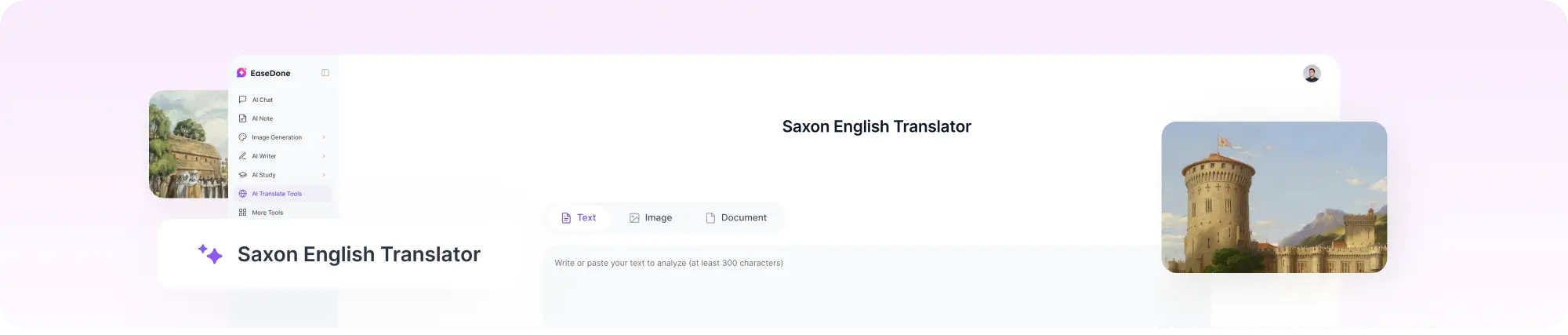
Saxon English, the language spoken in Britain from about 450 to 1100, is effectively foreign to modern readers: unfamiliar letters like þ, ð, and æ, grammar that packs meaning into word endings, and barely a word that survives unchanged. A saxon english translator does that reading for you, turning Anglo-Saxon text into modern English and, in the other direction, writing your words in Saxon style.
What Can EaseDone English Translator Do?
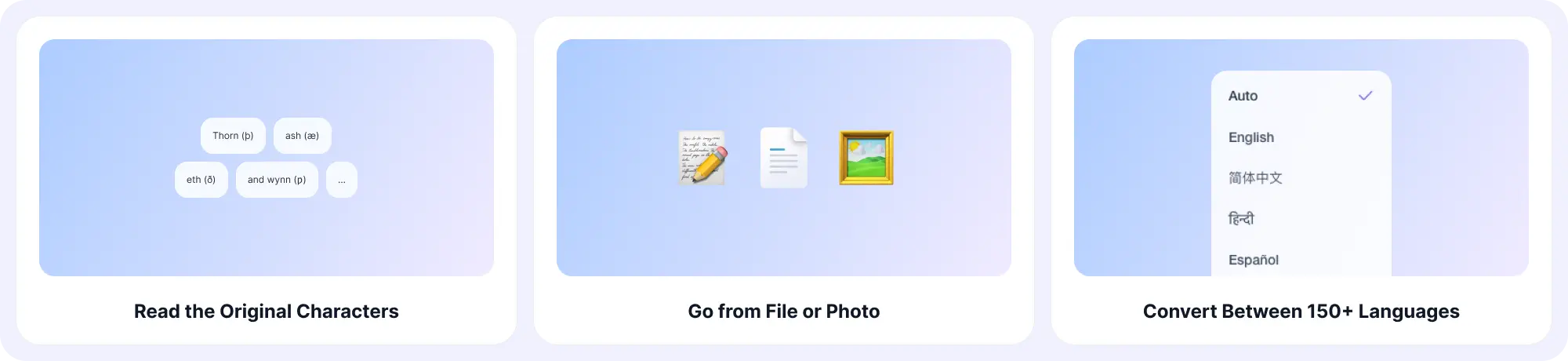
The tool is built for the specific problems Old English throws at readers.
Translate Anglo-Saxon to Modern English
Paste a line, a poem, or a full passage, and the AI reads it in context before translating into modern English, Chinese, French, or any of the 150+ supported languages. Because Old English word order and grammar differ so much from ours, sentence-level reading matters far more here than in later stages of the language. That is what separates an anglo saxon translator from a word list.
Write Modern English in Saxon Style
Start from modern English or any other supported language and get your words back in Old English style, with period vocabulary and the right characters. Popular for fantasy writing, naming things in games, mottos, and engravings.
Read the Original Characters
Thorn (þ), eth (ð), ash (æ), and wynn (ƿ) are all understood, along with the vowel marks used in student editions. Paste text exactly as it appears in your source. If you cannot type the characters, standard substitutions like th work as well.
Go from File or Photo
Old English rarely arrives as clean text you can copy. Upload a scanned page, photo, or PDF and the tool reads the text before translating, so you skip retyping þ and æ by hand. Up to 20,000 characters per translation, editable before export.
How to Translate Saxon English with EaseDone AI
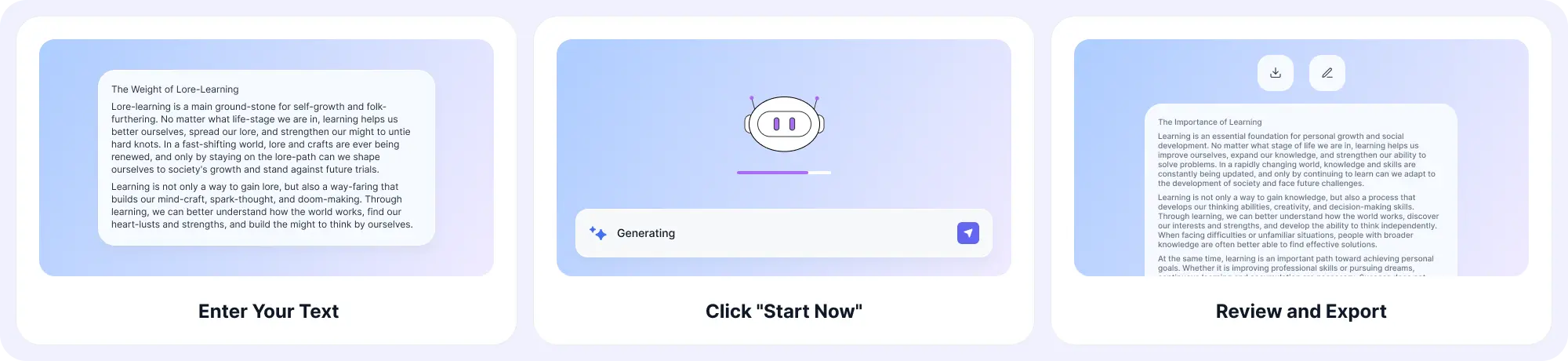
Step 1: Add Your Text
Paste the Old English passage, or upload a document or image of it.
Step 2: Click Start Now
The AI reads the passage and produces a modern English translation in seconds.
Step 3: Review and Export
Adjust anything you want, then copy or export the result.
Saxon English Translation Examples
Some well-known lines, before and after.
| Saxon (Old) English | Modern English |
| Hwæt! Wē Gār-Dena in geārdagum, þēodcyninga þrym gefrūnon | Listen! We have heard of the glory of the kings of the Spear-Danes in days gone by |
| Wyrd bið ful ārǣd | Fate is wholly inexorable |
| Ne bið swylc cwēnlic þēaw | Such is not a queenly custom |
And in the other direction, when you want your own words in Saxon style:
| Modern English | Saxon English Style |
| Good morning, my friend | Gōdne morgen, mīn frēond |
| Strength and honour | Strengþu and weorþmynd |
Who Uses a Saxon English Translator?
Students of early literature.
Beowulf, The Wanderer, and The Dream of the Rood appear in survey courses where nobody is expected to be fluent. A quick translation lets you follow the text while you learn how the language works.
Fantasy writers and worldbuilders.
Old English is the sound behind much of modern fantasy, from place names to battle cries. An old english translator running in reverse gives your fictional kingdom names and mottos that feel genuinely ancient.
People choosing inscriptions.
Tattoos, ring engravings, and family mottos in Anglo-Saxon are a real trend. Translating the phrase properly first beats trusting a random word list, especially for something permanent.
History and heritage researchers.
Charters, chronicles, and place-name records from before 1100 are in this language. A first-pass translation at home tells you whether a document is worth deeper study.
Why Choose EaseDone AI for Saxon English?
Free and instant.
Basic use needs no signup, and translations come back in seconds with very few limits.
Real translation, not word swapping.
Old English grammar packs meaning into word endings that a dictionary cannot see. The AI reads whole sentences, which is the only way this language translates correctly.
Ask what things mean.
After translating, continue in AI Chat: what wyrd meant to the Anglo-Saxons, why the poetry repeats itself, what a kenning is. Good context turns a translation into actual understanding.
One platform for every era.
The same free AI translate tools cover Middle English, Shakespearean English, and 150+ modern languages, and your results can be saved in AI Notes.
Saxon English Translator FAQ
Is Saxon English the same as Old English?
Yes. Anglo-Saxon, Old English, and Saxon English all name the same language, spoken from roughly 450 to 1100. The different names come from different habits: historians tend to say Anglo-Saxon, linguists say Old English. Whichever term you searched for, this is the language of Beowulf and the tool translates it.
Can the saxon english translator translate Beowulf?
Yes. Beowulf-era poetry is the classic use case, and passages from it translate well. Poetry does lose its alliteration and rhythm in any translation, so the output gives you the meaning rather than a poetic rendering. As a Beowulf translator for study support, it tells you what is happening line by line.
Does the saxon english translator understand runes?
The tool works with the Latin-alphabet Old English used in almost all editions and sources, including þ, ð, and æ. Runic inscriptions need to be transliterated into letters first. If you have a runic text, ask in AI Chat and it can help you work through the transliteration before translating.
How accurate is the saxon english translator for academic work?
Accurate enough to follow a text and check your own reading. Old English translation involves genuine scholarly judgement calls, and published translations differ from each other for the same reason. For coursework, use it as one reference among several and cite published translations where required.
Can I translate a phrase into Saxon English for a tattoo or engraving?
Yes, and it is worth doing carefully since the result is permanent. Translate your phrase, then reverse-translate the output back to modern English to confirm it says what you intend. For a short motto, also ask AI Chat for alternatives, because Old English often has a more idiomatic way to say the same thing.
Is the saxon english translator free?
Yes, basic use is free with no signup, up to 20,000 characters per translation, in both directions. The free plan also covers the platform's other translation tools. Heavier daily use is covered by paid plans.
Can EaseDone translate modern English into Saxon English?
Yes. Type your text and get Old English style output with period vocabulary and characters. Treat it as a faithful stylistic recreation: scholars reconstruct the language from surviving texts, so no modern sentence has one single "correct" Old English form.
What other historical English can EaseDone translate?
Middle English (Chaucer's language) and Shakespearean English each have their own translator on the platform, alongside 150+ modern languages. All of them run on the same engine and are free to start.